
Brain Mapping and Neurofeedback
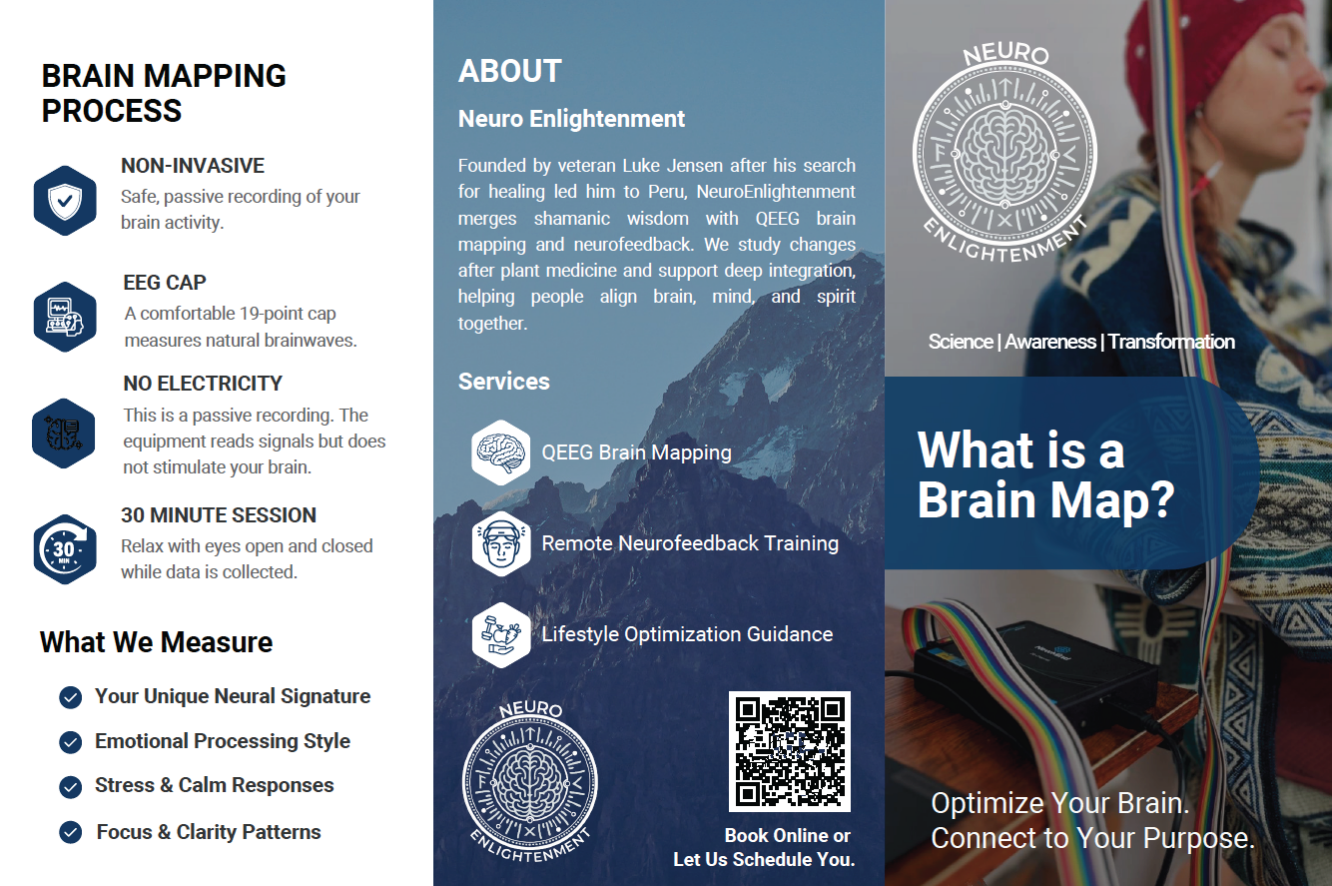
Brain mapping is a set of advanced neuroscience techniques used to visualize and measure the structure and function of the brain. By generating detailed, real-time images or data maps of brain activity, it helps clinicians and researchers understand how specific brain regions interact.
A qEEG produces colour-coded maps of brainwave patterns across regions. By comparing these patterns to age-normed references, we can identify imbalances or irregularities associated with challenges such as attention regulation (e.g., ADHD), anxiety, depression, sleep issues/insomnia, and cognitive or developmental differences. qEEG doesn’t diagnose conditions; it helps inform next steps and training plans.
How It Works
Brain mapping relies on several non-invasive or minimally invasive technologies to record what the brain is doing: Quantitative Electroencephalography (qEEG): Places sensors on the scalp to measure electrical activity (brainwaves). It evaluates areas of over- or under-activity. Functional Magnetic Resonance Imaging (fMRI): Measures brain activity by detecting changes in blood flow. Brain Stimulation/Mapping During Surgery: Used by neurosurgeons to precisely identify functional areas (like those responsible for language or movement) while a patient performs tasks.
Why It Is Used
Brain mapping translates complex neurological activity into targeted, actionable strategies: Mental Health & Neurological Disorders: Maps are often compared to standardized databases of healthy brains to identify dysregulations linked to conditions like ADHD, anxiety, depression, PTSD, and insomnia. This information helps guide neurofeedback or neuromodulation treatments.
Surgical Navigation:
Neurosurgeons use functional brain mapping to guide the removal of tumors or treat epilepsy, ensuring critical functions like vision, speech, and motor skills are safely preserved.
Cognitive Research:
Researchers use it to map complex neural networks to understand how the brain learns, ages, or responds to disease. The process is painless, safe, and serves as a vital diagnostic tool to ensure highly customized medical and therapeutic care.
Brain mapping is a non-invasive and non-drug diagnostic tool with a low risk of negligible side effects. The only potential side effect we have seen in 30 years of using the technology is infrequent, minor, and temporary skin irritation.
Is brain mapping legitimate?
QEEG Brain Mapping | Neurofeedback | Neurohealth Associates
Brain mapping is a legitimate, scientifically backed tool used in hospitals and clinics, primarily for surgical planning and evaluating brain function. However, its use in diagnosing or treating mental health conditions can be heavily overstated in commercial settings.
Legitimate Uses of Brain Mapping
Neurological & Neurosurgical Planning: In medical settings, techniques like fMRI and electrical cortical stimulation help neurosurgeons map critical functions (like speech and movement) to safely remove tumors or treat epilepsy.
Research and Diagnostics: Brain mapping helps researchers understand neurological disorders like Alzheimer’s, Parkinson’s, and cellular disruptions.
Mental Health & qEEG
In mental health, brain mapping often refers to Quantitative Electroencephalography (qEEG), which measures electrical brainwave activity.
Legitimacy: When conducted by trained clinicians, it can provide valuable information about brain dysregulation and patterns associated with ADHD, anxiety, depression, or PTSD.
The Catch: qEEG is not an official diagnostic tool on its own. It should only be used as a supplementary clinical tool alongside traditional psychiatric assessments.
To ensure you are receiving ethical care, verify that providers are formally licensed and rely on standardized databases to interpret the data. You can learn more about how neuroimaging ethics are standardized by exploring World Brain Mapping guidelines.
Is brain mapping painful?
Brain mapping is a non-invasive procedure, so it doesn’t have significant side effects. However, some people may experience mild discomfort during or after the process, such as skin irritation from the electrodes or a slight headache.
Join us! It will only take a minute
Call Toll Free: (800) 889-4171
Email: info@genesisibogaineinstitute.com